
Fall Painting in Oregon: The Ultimate Guide to Beating the Rain
If you are planning fall painting in Oregon around Sherwood, Wilsonville, or Oregon City, the thing you’re racing is the weather, not the calendar. Once the rain settles in and the nights get cold, exterior paint stops curing the way it should, and a job rushed into that window can look fine at first and show problems later. This guide covers what you can still paint outside, what to save for inside, and how we plan around Oregon’s fall weather. If your house is due, start with our house painting services.
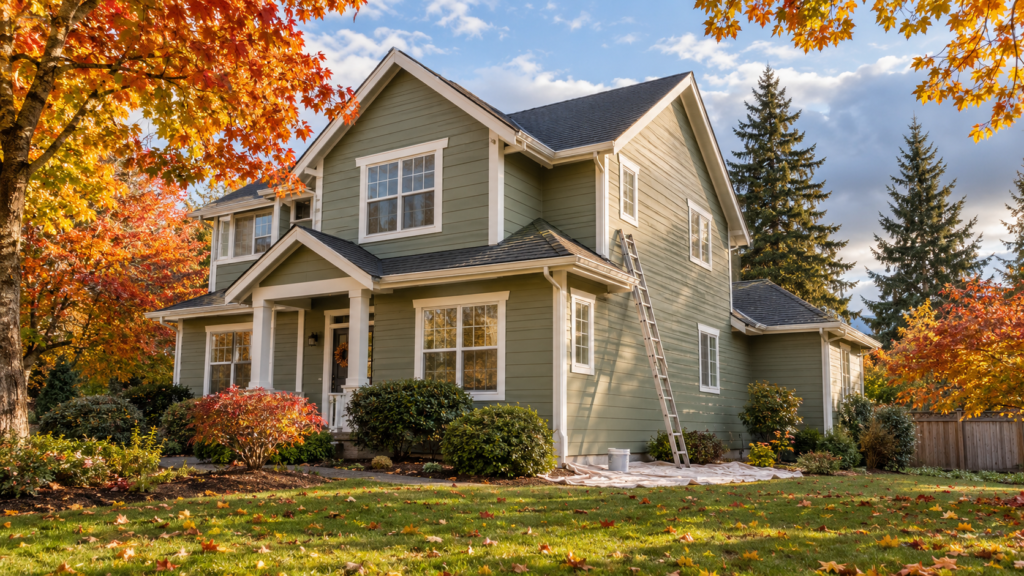
Can You Paint a House Exterior in the Fall in Oregon?
Yes, in early fall and with the right product. September and the first part of October often give us dry stretches warm enough to paint, but the window gets shorter every week as the days shorten and the rain comes back.
We plan fall exterior jobs around the forecast, not a fixed start date, and we’ll tell you plainly if your job is better off waiting for spring. You can see typical fall temperatures and rainfall for the area in the National Weather Service’s Portland climate data.
What Temperature Is Too Cold for Exterior Painting in the Fall?
It depends on the paint. Many standard exterior latex paints need at least 50°F, while some low-temperature lines from Sherwin Williams are rated down to 35°F.
The number that matters isn’t just the afternoon high. It’s the temperature of the siding itself and how cold it gets that night, because paint keeps curing for hours after we put the brush down. A 55°F afternoon followed by a 38°F night can still be a problem for a paint that needs 50°F.
How Does Fall Rain and Dew Affect Fresh Paint?
In the fall, moisture is a bigger problem than cold. If dew, fog, or rain hits latex paint before it cures, you can get surfactant leaching, which shows up as sticky tan or whitish streaks running down the siding. It usually washes off with water and doesn’t ruin the paint, but it looks bad and it’s avoidable.
Wet siding is the other issue. Painting over damp wood traps moisture under the paint, which is one of the main causes of peeling and bubbling down the road. That’s why fall days are short for us: we start after the dew burns off and stop early enough that the paint has a few hours to set up before the evening dew comes back.
What Exterior Work Should You Finish Before Winter?
If a full repaint has to wait, a few smaller jobs are worth doing before the rain sets in, because water soaking into bare wood all winter does more damage than anything else on the outside of a house.
- Failed caulk: Gaps around windows, trim, and siding joints let water get behind the paint.
- Peeling or bare spots: Scrape, prime, and spot-paint them so raw wood isn’t sitting exposed until spring.
- Fascia and trim near gutters: These stay wet the longest, so they’re usually the first boards to rot.
- The sides that take the weather: If the budget is tight, the walls that get the most sun and wind-driven rain are where to start.
Which Painting Projects Are Best for Fall and Winter?
Once outside work shuts down, inside work picks up, and none of it depends on the forecast.
- Interior walls and ceilings: The house is closed up anyway, and our Ultimate Guide to Interior Painting and ceiling painting guide walk through what’s involved.
- Garage and shop floors: A polyaspartic floor coating keeps curing in cooler temperatures that slow epoxy way down.
- Offices and shops: Our commercial painters can work after hours so you don’t have to close.
Should You Book Next Year’s Exterior Painting in the Fall?
Fall is a good time to get an estimate for next year, while peeling, fading, and failed caulk from a summer of sun are easy to see. Booking early gives you more say in when your job lands once dry weather comes back, instead of taking whatever opening is left in July.
Tips From Our Crew
- Watch the overnight low, not the high: A warm afternoon doesn’t help if the paint spends the night below its rated temperature.
- Look for a dry day after, too: We want a dry window after the last coat, not just while we’re painting.
- Clear the webs first: Fall is spider season, and anything that lands in wet paint stays in it, so we sweep eaves and corners before we start.
- Blow off leaves: Wet leaves on decks and walkways get tracked onto fresh trim and stick to wet paint.
- Keep the heat on inside: Interior paint cures slower in a cold room, so keep the house at its normal temperature during and after an interior job.
Related Projects and Guides
- The Type of Paint You Choose Matters, Especially in the Oregon Rain: why product choice matters more here than in drier climates.
- Exterior Painting in Oregon: The Ultimate Guide: timing, prep, and cost for a full exterior repaint.
Locations We Serve
We handle fall exterior work, interior painting, and floor coatings across the Willamette Valley, including Sherwood, Wilsonville, Oregon City, Milwaukie, and Dayton. We’re based in McMinnville, owned by Parker Smith, and licensed under CCB License No. 169003.
Frequently Asked Questions
Is fall a good time for exterior painting in Oregon?
Early fall can be, as long as there’s a dry stretch and temperatures stay above the paint’s minimum day and night. By late October, most exterior jobs are better off waiting for spring.
How cold is too cold to paint outside?
Many standard exterior paints need at least 50°F, and some low-temperature lines are rated down to 35°F. The overnight low matters as much as the daytime high.
What happens if it rains right after painting?
Rain or dew on uncured latex can cause sticky, tan or whitish streaks called surfactant leaching. It usually washes off, but heavy rain on very fresh paint can mean a recoat.
Can you paint inside a house in the winter?
Yes. Interior painting works year-round as long as the house is heated to its normal temperature while the paint cures.
When should I book next year’s exterior paint job?
Fall or winter is a good time to get an estimate, so your job is on the schedule before dry weather returns.
About Smith & Company Painting
Smith & Company Painting is a family-run residential, commercial, and industrial painting contractor based in McMinnville, OR, serving Yamhill County and the Willamette Valley. We are licensed under CCB License No. 169003 and handle everything from exterior repaints to floor coatings.
Contact Smith & Company Painting for expert residential exterior painting in Dayton, OR and throughout Northwest Oregon.
Why Choose Smith & Company
Visit us: 570 SE Davis St, McMinnville, OR 97128
Call us: 503-472-4334
Learn more: smithandcompanypainting.com
Smith & Company Social Media Pages
Facebook Instagram Tiktok YouTube LinkedIn X
