
Low-VOC Paint: The Ultimate Guide to Painting With the House Closed Up
Low-VOC paint is what we reach for when homeowners in Portland, Sherwood, and Dundee want interior painting done in the fall and winter, when the windows are shut and everyone is home. It cuts down on the fresh-paint smell and the chemicals that cause it, though it doesn’t make painting smell-free. This guide covers what VOCs are, what “low” and “zero” really mean on a label, and how to live in your house while it’s being painted. If you’re planning a project, start with our house painting services.
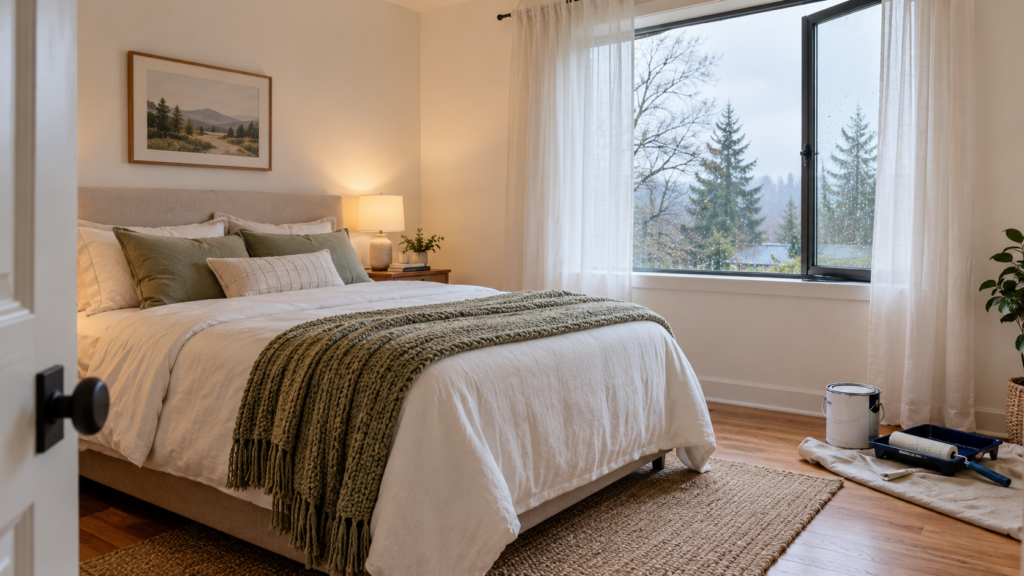
What Is Low-VOC Paint?
Low-VOC paint is paint made with fewer volatile organic compounds, the chemicals that evaporate into the air as paint dries. They’re most of what you smell in a freshly painted room.
The EPA lists paint as one of the common household sources of VOCs, and notes that levels can stay high in a room for a while after the work is done. That’s why fresh air matters as much as the paint itself.
Low-VOC vs Zero-VOC Paint: What’s the Difference?
- Low-VOC: A reduced amount of VOCs, usually measured in grams per liter on the product data sheet. Most modern interior latex paints fall here.
- Zero-VOC: Very close to none in the base paint, but not literally zero. Sherwin Williams Harmony is one zero-VOC interior line we can use.
- The catch with color: The tint added at the store can add VOCs, so a deep color can carry more than the label on the base suggests. Ask about zero-VOC colorant if it matters to you.
- Oil-based paint: Much higher in VOCs, and it’s the strong, lingering smell most people remember from older paint jobs.
Does Low-VOC Paint Hold Up as Well?
A good one does. Premium low-VOC lines from Sherwin Williams and Rodda cover well and hold up to scrubbing in hallways and kids’ rooms.
Where you can get burned is the cheapest low-VOC paint on the shelf, which can need an extra coat and scuff easily. The VOC number tells you about the smell, not the quality.
When Low-VOC Paint Isn’t the Right Choice
Sometimes the best product for the job has more VOCs, and we’ll tell you when that’s the case. Water stains, smoke damage, and wood knots that bleed through often need a stain-blocking primer, and the ones that work best on bad stains tend to be stronger smelling. Our Ultimate Guide to Priming 101 covers why skipping that step costs more later.
When we do use one, it’s usually only on the spots that need it, and we ventilate and keep that area closed off while it dries.
Can You Live in Your House While It’s Being Painted?
Yes, and most of our interior customers do. We work room by room so you’re not pushed out of the whole house, and low-VOC paint makes that a lot easier.
If someone at home is pregnant, has asthma, or is very sensitive to smells, check with their doctor first and plan for them to be somewhere else while the work is happening. That’s the one case where we’d say don’t tough it out.
Can You Sleep in a Freshly Painted Room?
With low-VOC paint and good airflow, many people can sleep in a room the night after it’s painted, but we suggest waiting until the smell has mostly faded. If you can still smell it, there’s still something in the air, so give it another night if you have a spare room.
How to Ventilate When It’s Cold Outside
- Crack a window anyway: Even an inch or two in the painted room, with the door closed, moves a lot of air out.
- Run the fans you have: Bathroom and kitchen exhaust fans pull air out of the house, and a box fan in a window pointing out does the same.
- Keep the heat on: Paint cures slower in a cold room, which means it gives off fumes longer. Keep the house at its normal temperature.
- Change your furnace filter after: Dust from patching and sanding ends up in the system.
Tips From Our Crew
- Move the birds out: Pet birds are far more sensitive to fumes than people, so take them to another part of the house, or out of it, until the smell is gone. Keep cats and dogs out of wet rooms so you don’t end up with paw prints on the trim.
- Ask for the data sheet: Every paint we use has one, and it lists the VOC content in plain numbers. We’re happy to share it.
- Plan the order of rooms: Bedrooms first in the morning gives them the most time to air out before bedtime.
- Close off the HVAC vents in the room being painted: It keeps the smell from spreading through the whole house while the paint is fresh.
Interior Projects We’ve Done
- Interior Repaint in McMinnville, OR: a repeat client’s interior repaint, including a bathroom upgrade.
- Interior Wall Repainting for a McMinnville Home: a whole-wall refresh inside a lived-in home.
Locations We Serve
We paint home interiors with low-VOC products across the Willamette Valley, including Portland, Sherwood, Dundee, Aurora, and Brooks. We’re based in McMinnville, owned by Parker Smith, and licensed under CCB License No. 169003.
Frequently Asked Questions
Is low-VOC paint safe?
Low-VOC paint puts fewer chemicals into the air than standard or oil-based paint, which makes it a better choice for occupied homes. You should still ventilate the room while it dries.
Does low-VOC paint have a smell?
Yes, a mild one. It’s much lighter than oil-based paint and usually fades within a day or two with good airflow.
Is zero-VOC paint better than low-VOC paint?
Zero-VOC paint has less smell, which helps if someone in the house is sensitive. For most homes, a good low-VOC paint works just as well.
Can I paint inside in the winter with the windows closed?
You can paint in winter, but don’t keep every window closed. Crack a window in the painted room and run exhaust fans so the fumes have somewhere to go.
Is low-VOC paint more expensive?
Most interior latex paint is already low-VOC, so you often aren’t paying extra. Zero-VOC lines can cost more per gallon.
About Smith & Company Painting
Smith & Company Painting is a family-run residential, commercial, and industrial painting contractor based in McMinnville, OR, serving Yamhill County and the Willamette Valley. We are licensed under CCB License No. 169003 and handle everything from exterior repaints to floor coatings.
Contact Smith & Company Painting for expert residential exterior painting in Dayton, OR and throughout Northwest Oregon.
Why Choose Smith & Company
Visit us: 570 SE Davis St, McMinnville, OR 97128
Call us: 503-472-4334
Learn more: smithandcompanypainting.com
Smith & Company Social Media Pages
Facebook Instagram Tiktok YouTube LinkedIn X
