Industrial Tank Coatings | Steel Tank Protection Systems, Sandblasting & Epoxy Linings
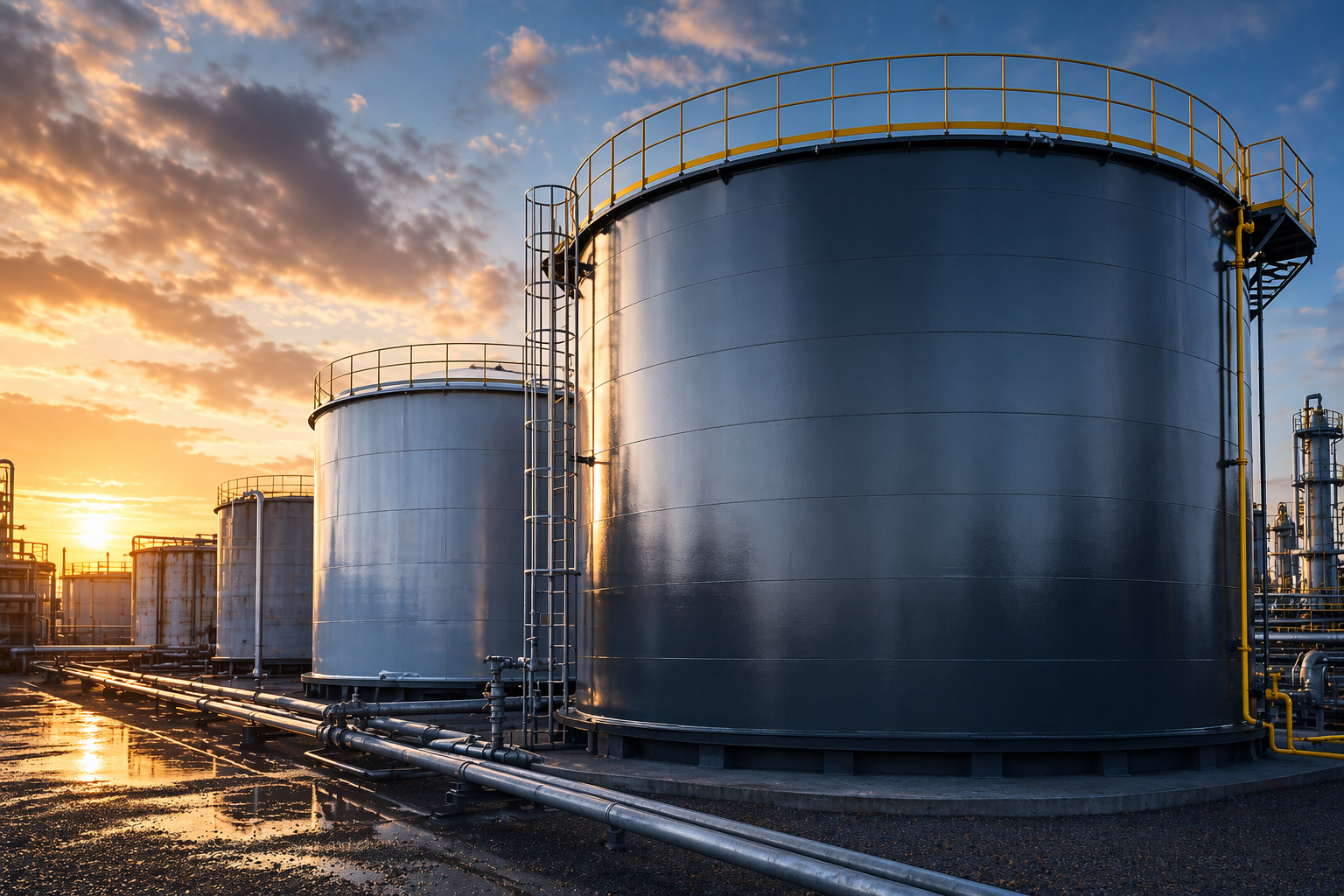
Industrial tank coatings are engineered protective systems designed to extend the service life of steel storage tanks exposed to corrosion, chemical attack, and environmental degradation.
These systems are used in fuel, chemical, water, and industrial environments where unprotected steel will rapidly deteriorate without a properly engineered coating system.
A complete industrial tank coatings system depends on three core components: surface preparation, epoxy coating systems, and protective topcoats.
System Overview: How Industrial Tank Coating Systems Work
Industrial tank coating systems are multi-layer corrosion protection assemblies designed to function as a single engineered system:
- Abrasive blasting (surface preparation)
- Epoxy primer / corrosion barrier
- Build coats for film thickness and durability
- Protective topcoat for UV and environmental resistance
Each layer contributes to long-term performance. Failure in any stage typically results in coating system breakdown over time.
Surface Preparation: The Foundation of Performance
Surface preparation is the most critical factor in industrial tank coatings performance.
Steel tanks are prepared using abrasive blasting (sandblasting) to remove:
- Rust and corrosion
- Mill scale
- Failed coatings
- Surface contaminants
Common standards include:
- SSPC-SP10 (Near-White Metal Blast)
- SSPC-SP5 (White Metal Blast)
This process creates the anchor profile required for epoxy adhesion and long-term coating durability.
Epoxy Tank Coating Systems
Epoxy coatings provide the primary corrosion barrier in industrial tank coatings systems.
They are selected for:
- Chemical resistance
- Moisture and vapor protection
- Strong adhesion to steel
- Long-term durability in harsh environments
Epoxy systems are commonly used as primers and intermediate coats in multi-layer industrial coating systems.
Build Coats and Topcoat Protection
Build coats increase system thickness and improve long-term performance by enhancing:
- Impact resistance
- Moisture protection
- Chemical durability
Topcoats (epoxy or polyurethane) provide final protection against:
- UV exposure
- Weathering
- Surface degradation
Industrial Tank Coating Failure Mechanisms
Most industrial tank coating failures are caused by application or preparation issues rather than coating material defects.
Common causes include:
- Poor surface preparation (primary cause)
- Moisture or contamination during application
- Incorrect coating system selection
- Insufficient film thickness
- Edge and weld breakdown zones
Once corrosion begins beneath a coating system, it typically spreads until full remediation is required.
Past Smith & Company Painting Projects
Below are verified industrial coating and restoration projects completed by Smith & Company Painting:
Commercial Fuel Tank Sandblasting & Restoration – City of Lake Oswego, Oregon
Project Type: Municipal fuel storage tank restoration
Scope: Sandblasting, protective coating system application
This project involved full restoration of a municipal fuel storage tank critical to city operations. The tank was fully abrasive blasted to remove corrosion and failed coatings, followed by application of a protective industrial coating system designed to extend service life.
Industrial Tank & Silo Restoration – Amalgamated Sugar (Portland, Oregon)
Project Type: Industrial steel tanks and silo coating system
Scope: Sandblasting, corrosion removal, epoxy primer system, finish coatings
This large-scale industrial project included restoration of multiple steel tanks and a large industrial silo. Work included full surface preparation, corrosion removal, and application of industrial-grade coating systems.
Industrial Tank Restoration vs Replacement
Industrial tank coatings restoration is often significantly more cost-effective than full tank replacement when corrosion is addressed early.
Key advantages:
- Lower capital cost
- Reduced downtime
- Faster execution
- Extended service life (10–20+ years)
- Improved lifecycle efficiency
Industry Standards and Specifications
Industrial tank coatings systems follow established industry standards:
- SSPC / AMPP surface preparation standards
- NACE inspection protocols
- ASTM coating performance testing
- NSF 61 potable water certification (where applicable)
These standards define performance expectations for surface preparation and coating application.
Industrial Tank Coating Services
Smith & Company Painting provides industrial tank coatings and corrosion protection services throughout Washington, Oregon, and the Pacific Northwest.
Services include:
- Abrasive blasting and surface preparation
- Epoxy tank lining systems
- Fuel and chemical tank coatings
- Water storage tank restoration
- Field-erected steel tank rehabilitation
- Industrial corrosion protection systems
Frequently Asked Questions (FAQ)
What are industrial tank coatings used for?
Industrial tank coatings protect steel tanks from corrosion, chemical exposure, and environmental degradation while extending service life.
How long do industrial tank coatings last?
Most systems last 10–20 years depending on surface preparation, coating system selection, and environmental exposure.
Why is sandblasting important?
Sandblasting removes corrosion and creates a surface profile that allows epoxy coatings to properly bond to steel.
What is the best coating system for steel tanks?
A multi-layer epoxy system with a polyurethane topcoat is commonly used for long-term industrial corrosion protection.
Can tanks be restored instead of replaced?
Yes. Many steel tanks can be fully restored using abrasive blasting and engineered coating systems.
Why do industrial tank coatings fail?
Most failures are caused by poor surface preparation, contamination during application, or incorrect system selection.
About Smith & Company Painting
Smith & Company Painting provides residential, commercial, and industrial painting throughout Northwest Oregon.
Visit us: 570 SE Davis St, McMinnville, OR 97128
Call us: 503-472-4334
Learn more: smithandcompanypainting.com
Smith & Company Social Media Pages
Facebook Instagram Tiktok YouTube LinkedIn X
